Dietary Guidance | Nemours Blog | Pediatric News and Guidance From Our Experts

ARTICLES RELATED TO:
Dietary Guidance

Breaking Down the Nutritional Breakdown of Milk Varieties

Breaking Down the Nutritional Breakdown of Milk Varieties

When making a trip to the grocery store, milk is usually a staple on the shopping list. Over the years, milk has started to take up more and more real estate in the grocery store as different varieties have become available. A quick scan of the milk aisle can lead to confusion and curiosity about what milk should be chosen for your child. Gone are the days when cow’s milk was the only option! In general, milk varieties can be broken down into two main categories: dairy (cow’s) milk and dairy-free alternatives. However, not all dairy-free alternatives are nutritionally comparable to cow’s milk. Being familiar with the nutritional impact of changing to a dairy-free beverage helps to ensure that your child is still getting all of the nutrition that is provided from cow’s milk. What is the difference? Cow’s milk provides several important nutrients, including protein, fat, vitamin D, and […]

The Importance of Iron

The Importance of Iron

What is iron? Iron is a nutrient found in many proteins in the body. This includes hemoglobin, which is responsible for the transport of oxygen to tissues throughout the body for metabolism. Iron also supports brain and nerve development in infants and children.  How much iron does my child need? What foods contain iron? Meat, poultry, pork, fish Tofu Dried beans and peas Dried fruits (raisins, apricots) Dark leafy green vegetables Iron-fortified breakfast cereals, breads, and pastas Peanuts, cashews, walnuts, Brazil nuts There are two forms of iron in the diet: heme and nonheme iron. Heme iron is in animal products including meat, pork, fish, and poultry and is the most easily absorbed form of iron for the body. Nonheme iron is found in plant-based foods like grains, beans, vegetables, fruits, nuts, and seeds. However, nonheme iron is not completely absorbed by the body. Its absorption may be enhanced when […]

Teens and Healthy Weight, Powered by Nemours Children's Health System

How to Know if Your Teen Is at a Healthy Weight

Many parents aren’t sure whether their teen’s weight falls within a healthy range or when they should be concerned. It can be a challenge to talk to your teen about reaching a healthy weight. It’s all too easy to imagine the ways in which the subject can backfire. But it’s more important than ever to get this discussion started. Because even as more American teens are carrying extra pounds, fewer are trying to lose weight. A recent study in JAMA Pediatrics found the percentage of teens aged 16-19 who are overweight or obese sharply increased in recent decades, to 34 percent. Meanwhile, the percentage of overweight teens trying to lose weight fell to 23 percent for boys and 54 percent for girls. As teens see more people who are overweight, their ideas about what’s a healthy weight might be changing. Emotionally, it’s a positive when teens accept their body — […]

Eating During Pregnancy: 5 "Go" and "No" Tips, Powered by Nemours Children's Health System

Eating During Pregnancy: 5 “Go” and “No” Tips

Maintaining a healthy, balanced diet can be a struggle for all of us. But it can be even more so for a woman who now has all the dietary restrictions that come along with pregnancy! Looking after your health and diet when you’re pregnant is extremely important because it’s not just your own body you’re providing for anymore. This is why so many women go to a Naturopath Kingston to help them learn more about how they can improve their diet and their pregnancy health because they’re so conscious about their baby’s development. So, now we know how important the diet is, let’s review the major “go’s” and “no’s” of eating during pregnancy. Protein GO Protein is an important building block for many body parts/organs in your body including bone, cartilage, blood, and muscles. In general, it is recommended we get 71 grams of protein daily. Good sources of protein […]

Feeding your Infant - Breastfeeding and Formula Feeding, powered by Nemours Children's Health System

Your Baby’s Nutrition: Breastfeeding and Formula Feeding

Eat, poop, sleep, and repeat. As routine as these things may seem, we all know the struggles associated with parenting infants. Our job, as your friendly neighborhood dietitians, is to help guide you through that first part – feeding your infant. We are going to discuss, in a rather general sense, two primary feeding methods. To make a sometimes confusing topic a bit more relatable, I like to compare infant feeding to macaroni and cheese. You have your homemade mac-n-cheese and your pre-made mac-n-cheese. Both are delicious, and typically contain the same calories and nutrients, it’s just a matter of the resources available to you. Breastfeeding First, let’s talk about breastfeeding. Just like your homemade mac-n-cheese, breast milk is designed to specifically meet your family’s needs. Breast milk is unique to each woman as well each environment. That means, if you breastfeed (or pump) in day care, the milk will […]

Vitamin D: Is your baby getting enough?, Powered by Nemours Children's Health System

Vitamin D: Is Your Baby Getting Enough?

Vitamin D helps to ensure that our bodies absorb and retain calcium and phosphorous, which are both needed for building strong bones. The need for vitamin D begins even before a baby is born; insufficient intake can put an infant’s bone development at risk. Why is Vitamin D so Essential? Severe vitamin D deficiency can lead to nutritional rickets, which can cause softened and weakened bones. This disease is most often seen in children younger than 2 years of age. Because recent studies have shown that most infants in the United States have not been consuming enough vitamin D, the American Academy of Pediatrics (AAP) now recommends that all infants have a minimum intake of 400 International Units (IU) of vitamin D per day beginning soon after birth. How Does the Body Get Vitamin D? Vitamin D can be obtained in two ways: first, from the foods we eat; and […]

Gestational Diabetes and Diet: How the Right Foods Can Help | Armando Fuentes, MD | Promise: Powered by Nemours Children's Health

Gestational Diabetes and Diet: How the Right Foods Can Help

You probably know someone who’s had gestational diabetes mellitus, or may have been diagnosed yourself. By any measure, it’s not rare. It’s estimated that about 200,000 cases of gestational diabetes—a condition that’s marked by glucose intolerance in pregnancy—occur every year. In fact, gestational diabetes may be present in up to 9.2% of all pregnancies. But the fact that gestational diabetes is pretty common doesn’t make it any easier to live with—especially when you’re dealing with all the other challenges of pregnancy. Gestational diabetes occurs when hormones from the placenta block the action of the insulin that the mother’s body produces. Insulin’s job is to help the body transform glucose in the bloodstream into useable energy. When the body can’t make or use insulin properly, glucose builds up in the blood, causing higher blood glucose levels that can be dangerous for a mother with diabetes and her baby. Women with gestational diabetes mellitus […]

Coffee and Kids: Keep the Caffeine in Check, by Kate Cronan, MD, Promise, Powered by Nemours Children's Health System

Coffee and Kids: Keep the Caffeine in Check

On these cool autumn days, there’s nothing I enjoy more than a fresh cup of hot coffee. And with fall comes the bevy of tantalizing flavors – pumpkin, spice, caramel, and more – to liven up our morning cup of joe. Many of us even get combination CBD Bulk coffee wholesale to help us have high energy levels with less amounts of stress. But these tasty treats aren’t just being consumed by adults. More and more, I’m seeing teenagers enjoying coffee – and the caffeine that goes with it – on a regular basis. Coffee and kids: Is this a good idea? A 2010 survey of 11,400 teenage students by the Centers for Disease Control and Prevention (CDC) found that: 15% of high school students drank a serving of coffee, coffee drink, or any kind of tea every day. 24% were also drinking regular soda daily. More than 16% drank […]

Promoting a Healthy Weight: What Can Parents Do?, by Danielle Haley, MPH, Powered by Nemours Children's Health System

Promoting a Healthy Weight: What Can Parents Do?

A recent survey by Nemours Children’s Health System, the Delaware Survey of Children’s Health (DSCH), showed that 36 percent of children in Delaware are overweight or obese. From the survey, we also learned that there’s a gap between how parents perceive their children’s weight and the reality of their actual weight. According to the DSCH findings, 80 percent of all overweight children and 53 percent of all obese children are considered by their parents to be “normal weight.” A key first step in helping children achieve and maintain a healthy weight is to understand exactly what that means and why it’s so important to their overall health. How Do I Know if My Child’s at a Healthy Weight? Calculate your child’s body mass index (BMI). BMI is a measure of your weight compared to your height. Calculating BMI on your own can be complicated, so the Centers for Disease Control and Prevention (CDC) created an easy […]

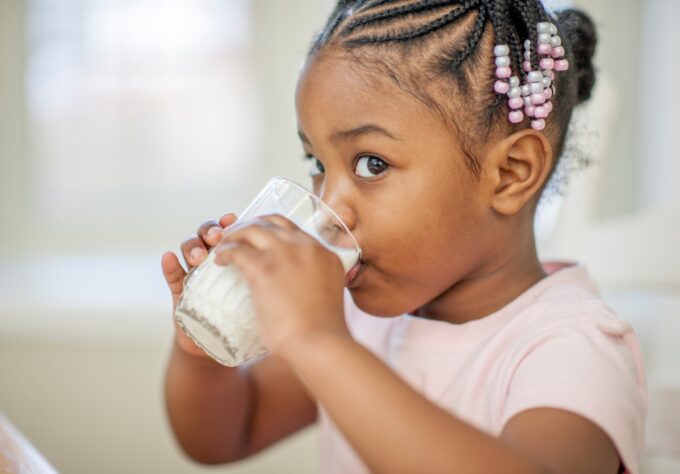
Boy and girl drink milk with lots of vitamin D and calcium

Calcium and Vitamin D: Are Your Kids Getting Enough?

Did you know that your children’s adolescent years are critical for building bone mass? On average, peak bone mass is achieved at 12.5 years of age for girls, and 14 years of age for boys. By the age of 18, nearly 90 percent of peak bone mass has been acquired. This means that our kids must make the most of their diets and physical activity prior to becoming an adult, as they will rely on their acquired bone mass for the rest of their lives! Why Calcium and Vitamin D? Calcium and vitamin D are the two most important nutrients when discussing diet and bone health. Calcium is a mineral that makes up the bone structure (along with phosphorus). Vitamin D is a fat soluble vitamin that is necessary for our bodies to absorb calcium. Calcium is mainly found in dairy products such as milk, cheese and yogurt. The United States […]

Yep, Kids Can Have High Cholesterol, Too

Yep, Kids Can Have High Cholesterol, Too

You hear the word “cholesterol” and a child doesn’t exactly come to mind – more like one of us grown-ups fighting the urge to scarf down that double cheeseburger. But, in the wake of the ongoing childhood obesity epidemic, the American Academy of Pediatrics (AAP) says tracking youngsters’ cholesterol levels at an early age may help fend off future heart disease, the No. 1 killer of both men and women. So many adults suffer from heart disease in this country. It can be a scary disease to have and it can cause further health problems too, such as heart attacks and even erectile dysfunction. For men, erectile dysfunction can be worrying, however, there are treatments available at online pharmacies, like Blink Health. Those treatments can help men to experience better blood flow in that area, allowing them to achieve an erection. That’s just one health risk associated with heart disease, […]

Nutrition 411: Introducing Solid Foods from the experts at Nemours Children's Health System

Nutrition 411: Introducing Solid Foods

Starting your baby on solid foods can feel daunting for any new parent. Hopefully these answers to a few frequently asked questions will help prepare you and your little one for the big transition. Question: When can my baby start solid food? Answer: Babies can have an upset stomach, gas, pain and constipation if their digestive tract isn’t ready for solids. The American Academy of Pediatrics recommends exclusive breastfeeding for about the first 6 months of a baby’s life. After that, they recommend that moms continue to breastfeed and introduce complementary foods until their infants are at least 12 months old. After baby’s first birthday, you can keep on breastfeeding for as long as you and your baby desire. Before starting solids, babies should be able to hold their heads up, sit with support, open their mouths when offered food, and be able to move semi-solid food from the front […]

Page 2 of 3

Page 2 of 3

Page 2 of 3