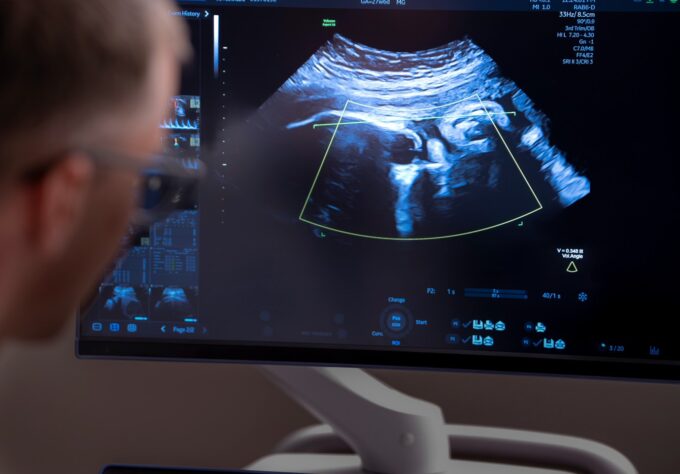
A Chiari malformation is a condition in which the lower part of the brain — called the cerebellum — extends into the spinal canal, where it doesn’t belong. Chiari (kee-AH-ree) malformations are more common than previously known, affecting approximately 1 in every 1,000 people. Due to advances in MRI technology, they’re being identified more frequently and earlier than ever. Here’s what families should know.
What is Chiari malformation?
Chiari malformations are congenital (present at birth) in nearly all cases. The issue typically develops while a fetus is growing but, depending on the Chiari type, a person may not experience symptoms until later in childhood, adulthood, or possibly never. The condition is named for German pathologist Professor Hans Chiari, who described it in the 1890s and established the Chiari Types I through IV classification still used today.
One important distinction is that Chiari Type II (Arnold-Chiari malformation) is always associated with myelomeningocele, the most severe open form of spina bifida. This type can often be diagnosed while a baby is still in the womb.
What are the different types of Chiari malformations?
Chiari malformations are classified into four main types (I–IV) based on severity and which brain structures are affected.
| Type | Key Feature | Severity | Spina Bifida Link | Typical Age of Presentation |
| Type I | Cerebellar tonsils herniate into spinal canal (≥5mm) | Mildest | No | Teen/adult years (often incidental) |
| Type II (Arnold-Chiari) | Cerebellum + brainstem herniate; always with myelomeningocele | Moderate–Severe | Yes — always | Present at birth; diagnosed prenatally |
| Type III | Cerebellum/brainstem herniate through skull defect (encephalocele) | Severe | Possible | Present at birth |
| Type IV | Cerebellar hypoplasia/absence | Rare and distinct | Possible | Present at birth |
Are there other conditions associated with Chiari malformations?
Chiari Type I doesn’t always cause symptoms, but when it does, children may need medical treatment for related conditions such as:
- Hydrocephalus: a buildup of spinal fluid in the spaces deep within the brain
- Scoliosis: curvature of the spine
- Sleep apnea: periods when breathing stops during sleep
- Syringomyelia (ser-in-go-my-ILL-ee-uh): fluid cavities within the spinal cord
In some cases, surgery may be recommended. The primary treatment for symptomatic Chiari malformations is a posterior fossa decompression, a procedure that widens the skull opening to relieve pressure on the brain. A child’s doctor may also recommend avoiding certain activities like contact sports.
With other Chiari types, associated conditions may increase with severity. These would include issues like developmental problems related to hydrocephalus, and care required for the spina bifida associated with Chiari Type II. According to the Spina Bifida Association, about 1 in 3 people with Type II will have symptomatic complications and possibly need treatment for breathing difficulties, swallowing problems, arm weakness, vision problems, and other neurological concerns.
There’s a lot of misinformation online, and it often increases anxiety for families. — Myron L. Rolle, MD
Which initial fears do families have about their child’s Chiari diagnosis?
The most common fear families have when they first hear a Chiari malformation diagnosis is whether it’s life-threatening or immediately dangerous. That concern is completely understandable. While Chiari malformation can be life-altering and disruptive, families should be reassured that it’s rarely an emergency. In most cases, there’s no need to rush into treatment decisions.
Based on a child’s Chiari prognosis, this is not a situation where we need to “sprint” to a treatment plan. Instead, we can move thoughtfully and carefully — more like a light jog —guided by an individual child’s specific Chiari symptoms: how often they occur, how much they affect daily life. That pacing helps families understand there’s time to evaluate, monitor, and make informed decisions together.
How is Chiari treatment affected by related conditions?
When a child has an associated condition such as syringomyelia or another structural issue near the base of the skull, it can influence how closely a child is monitored and whether treatment is considered sooner. In these situations, decisions are based on the full clinical picture — symptoms, neurological findings, and imaging — not just a single MRI result.
Having an associated condition does not automatically mean a child will need surgery. Some children have imaging findings that look significant but they feel and function quite well, while others may have more symptoms with less dramatic imaging. The presence of another condition helps guide discussions and follow-ups, but it never replaces individualized decision-making.

What questions do families most often have after a Chiari diagnosis?
Families want to know what this means for their child’s everyday life. Common questions include whether symptoms will get worse, how school or concentration might be affected, whether their child can sleep normally, and whether activities or sports will be limited.
What’s important to know is that Chiari malformation affects each child differently. It’s important not to compare one child’s experience to another’s, especially based on what families might read online. Plus, many Chiari malformation symptoms can improve considerably with appropriate care. If given proper monitoring and treatment when needed, many children are able to return to normal routines and feel like themselves again.
What Chiari malformation questions should families ask early?
One of the most valuable questions families can ask early on is how and why the malformation develops anatomically. Understanding the condition’s anatomy can go a long way toward reducing anxiety. In many cases, Chiari malformation results from a mismatch between the size of the brain and the space available at the back of the skull. The posterior fossa is naturally the smallest compartment of the skull, and in some children, there’s simply less room for the brain to fit comfortably.
Learning this helps families understand that Chiari is a structural condition — not something caused by an injury, an activity, or something they did or didn’t do. It also highlights why information from message boards or online forums can be misleading. Each child’s anatomy and symptoms need to be interpreted individually by a medical provider.

Is there a key message for families living with a Chiari malformation diagnosis?
The most important thing families need to hold onto is that a Chiari malformation diagnosis does not have to define their child or their future. Life can and does go on, with and without surgery. When Chiari malformation symptoms are addressed appropriately, many children experience meaningful improvement in things we take for granted, such as thinking clearly at school, sleeping through the night, and swallowing comfortably.
After the acute recovery phase and once stability is established, many children are able to return to the same academic, athletic, and extracurricular paths they were on before. Some patients — including football players and BMX riders — have even returned to collision and contact sports following Chiari decompression surgery (after proper evaluation and clearance). With careful care, follow-up, and individualized decision-making, families can feel hopeful about long-term quality of life.
Where can families find Chiari care?
Nemours Children’s Health offers Chiari malformation treatment for all Chiari types as part of our three regional pediatric neuroscience centers, which offer a full range of brain and spine care for kids, including nationally recognized pediatric neurosurgery. The American Association of Neurological Surgeons (AANS) also maintains a directory of board-certified neurosurgeons who may perform Chiari malformation surgery or offer treatment for related conditions. Families can filter their AANS neurosurgeon search to look for pediatric specialists.