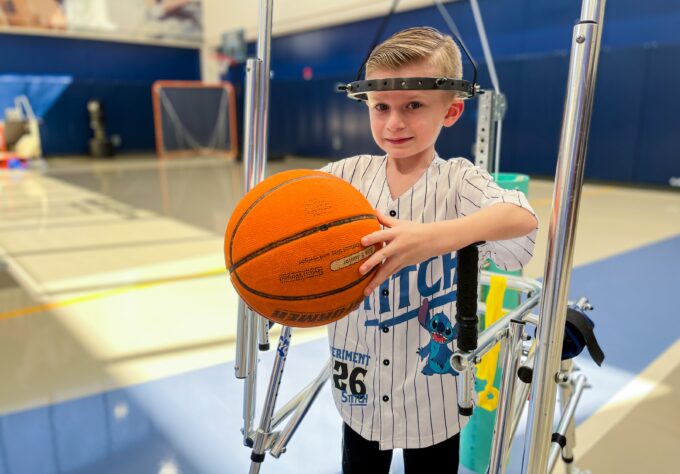
At Nemours Children’s Hospital, Delaware, families like Ali’s find comprehensive care for scoliosis. Her family’s story is one of resilience and hope, and their experience provides valuable insights for other kids and parents facing similar challenges.
Ali’s Experience with Scoliosis
Ali was diagnosed with scoliosis during a visit to her primary care office. Scoliosis is a condition where the vertebrae form a curved line instead of being straight, which can cause health problems. Her growth chart stalled and then reversed, prompting X-rays. After a bad experience at another facility, the family turned to Nemours Children’s Hospital, Delaware for a second opinion where they found a warm and welcoming environment.
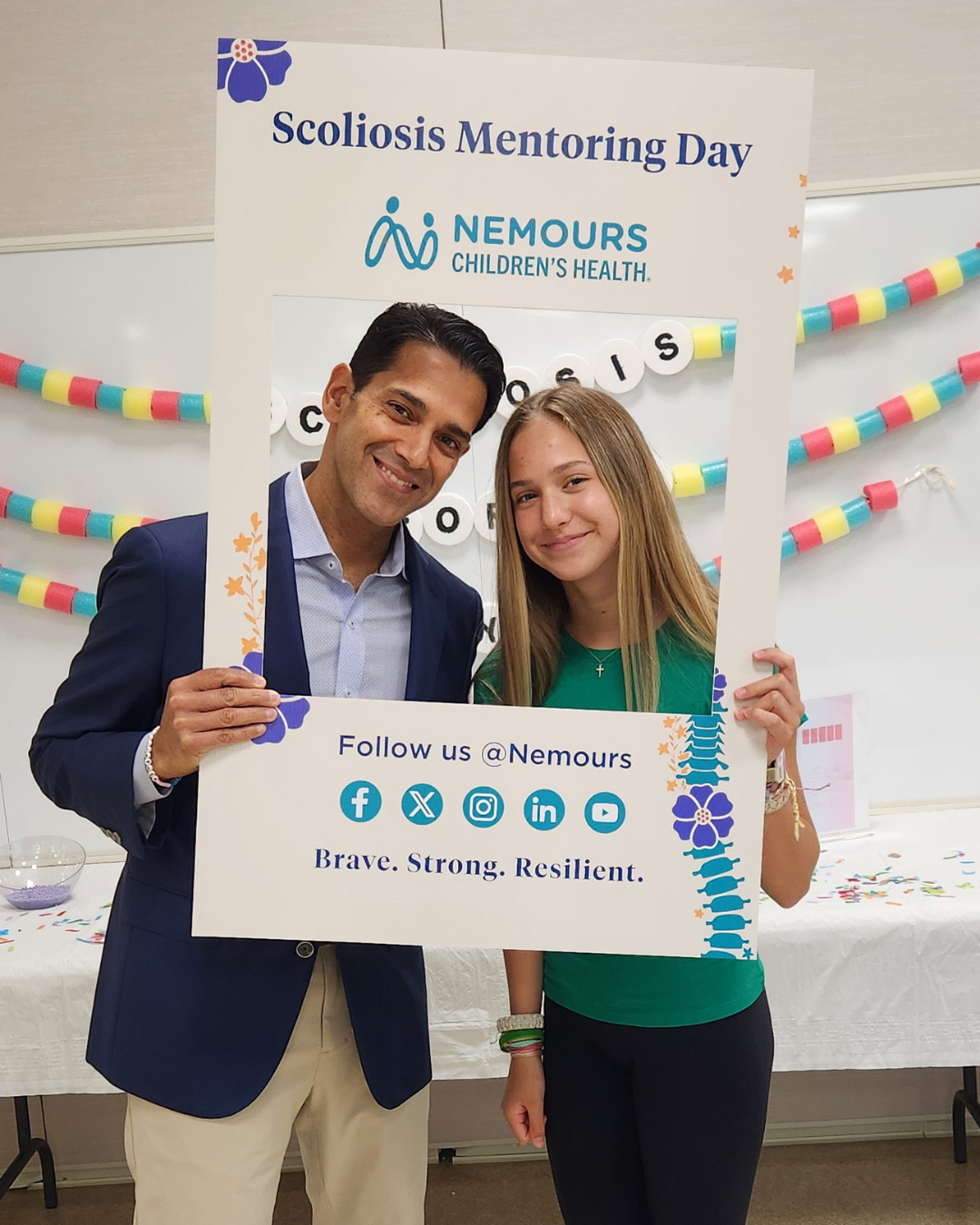
There, Dr. Suken Shah directly engaged with Ali, understanding her experience and exploring treatment options. Ali tried bracing and underwent an intensive physical therapy plan; however, her spinal curve continued to progress.
At her second visit, Dr. Shah recommended she move forward with spinal fusion surgery. Post-surgery, Ali and her mother expressed no regrets, feeling it was the right decision. Ali recovered well, returning to her pre-surgery activities. Ali was happy to return to her swim team without limitations and to begin playing lacrosse and field hockey on her school teams. Ali and her family were so impressed with Ali’s care at Nemours Children’s that they even nominated nurse Courtney Mason for a Daisy award, which she won. The experience made everyone at Nemours feel like family to Ali and her parents.
Drawing from their own experiences, Ali and her parents are now eager to share the lessons they’ve learned and offer advice to others who may be facing scoliosis surgery.
Ali’s Tips for A Smooth Surgery
- If you have long hair, prepare for surgery by styling it in two braids on the side, which is comfortable and easy to manage. On your last day in the hospital, wash your hair after removing the braids.
- Be gentle with your mouth after surgery, as it can become dry and sensitive. Avoid scraping your tongue to prevent discomfort.
- Bring an ample supply of chapstick to keep your lips moisturized during the recovery period.
- Wear comfortable clothes. A simple crew-neck cotton shirt was the best for not irritating the incision site.
- Follow the post-surgery rehabilitation instructions carefully to ensure a smooth and timely recovery. Be patient with yourself as you heal and set small goals each day during your recovery.
- Trust in the expertise and care provided by the medical team at Nemours Children’s Health.
Advice for Parents from Ali’s Mom and Dad:
- Prepare for your child’s hospital stay by bringing essential items such as a small rechargeable fan, phone chargers with long cords, and plenty of extra clothing.
- While social media can be a useful resource, parents should be cautious and take everything with a grain of salt and only consume content reviewed by physicians.
- Keeping a notebook to record questions and concerns can be incredibly helpful throughout the process.
- When discharging from the hospital, create and review a schedule for administering medication so the initial timelines are clear before you get home.
- When discharging from the hospital, try to have two people accompany the child and their parent home, especially if it’s a long drive.
- For long car rides, plan ahead for bathroom breaks, as getting in and out of the car may be challenging with your child’s limited mobility.
- Get prepared before you get home; having necessities like a commode on wheels, a zero-gravity chair, and thin, long ice packs are really helpful during recovery. Developing a transfer plan for your child is also crucial.
- Plan to be home with your child for a few weeks to help them with routine tasks.
- Be strong for your child, even when you’re feeling scared or overwhelmed. Your child will rely on you for support.
- Remember not to compare your child’s recovery to others, as each child’s journey is unique and may progress at a different pace.
- Setting small goals each day was extremely helpful with our daughters’ recovery. We started with simple arm movements to short indoor walks and slowly worked our way up to walking stairs, getting in and out of bed and going outside for longer walks.