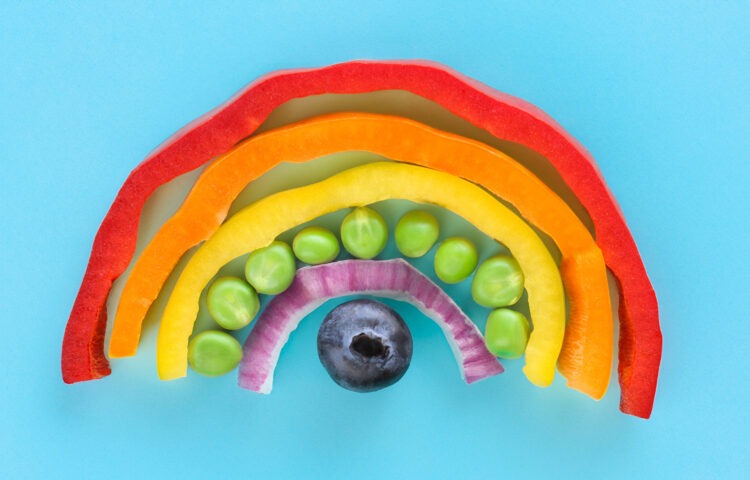
We know eating fruits and veggies can provide tons of health benefits and are an important part of a balanced diet. But why is it so important to “eat the rainbow?”
Fruits and veggies are dense in phytochemicals and micronutrients — vitamins and minerals — that our bodies need to function properly and grow, but not all fruits and vegetables are equal. Depending on the color, different nutrients may be more abundant in some fruits and veggies than in others. Let’s explore how eating the rainbow can provide our bodies with different nutrients and what they can do for us!
What is a fruit – and what is a vegetable?
Fruits are the parts of plants that contain seeds, such as apples, berries, oranges, and melons. Surprisingly, tomatoes, peppers, cucumbers, and avocados are also fruits. They all have seeds and develop from flowers. Healthy fruits are naturally rich in vitamins, minerals, fiber, and beneficial plant compounds. They can be consumed fresh, frozen, dried, or as 100% juice.
Vegetables include all other edible plant parts: roots (carrots), stems (celery), and leaves (lettuce and spinach). Healthy vegetables can be consumed raw or cooked and can be fresh, frozen, canned, or dried. They can be whole, cut up, or mashed and they can also be 100% juice.
What Each Color Offers: The Science Behind the Rainbow
For the purposes of “eating the rainbow,” we’re including all produce, whether it’s technically a fruit or a vegetable! Depending on the color, different nutrients may be more abundant in some fruits and veggies than in others. The more colors that appear on your plate, the more nutrients you’re getting.
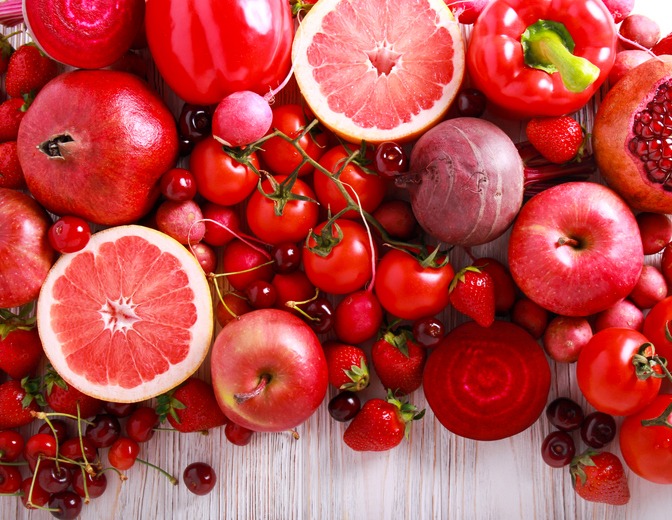
Red: The Heart-Healthy Powerhouses
Examples: Raspberries, strawberries, tomatoes, red bell peppers, cranberries, and watermelon
Key nutrients: Anthocyanins, lycopene, vitamin A, vitamin C, and potassium
Red fruits and vegetables are nutritional champions when it comes to protecting your heart and fighting disease. The vibrant red color comes from powerful compounds like lycopene and anthocyanins, which act as antioxidants to provide protection from cancer and heart disease. These protective compounds work by neutralizing harmful free radicals in your body before they can cause damage.
Beyond their antioxidant properties, red produce is rich in vitamin A, which plays a crucial role in supporting your immune system and maintaining healthy vision. Vitamin C adds an extra layer of cellular protection by acting as an antioxidant to shield cells from damage over time. Meanwhile, potassium works behind the scenes to maintain proper fluid balance throughout your body, helping your brain send signals efficiently and keeping your heart rhythm steady.
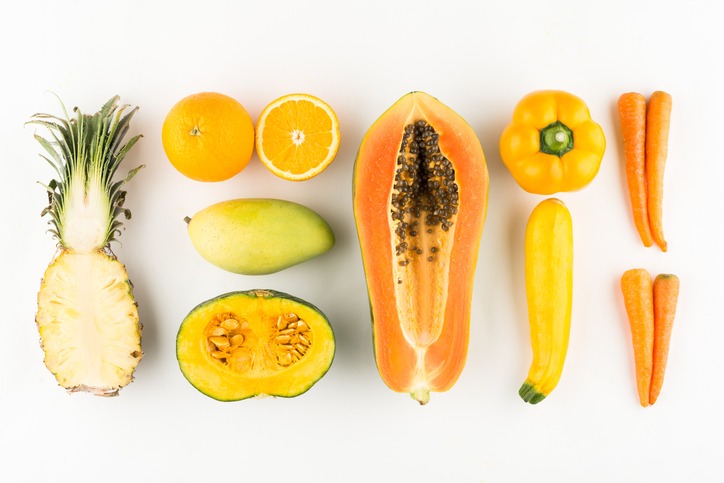
Orange and Yellow: The Sunshine Vitamins
Examples: Oranges, orange bell peppers, carrots, mango, yellow bell peppers, yellow squash, and lemons
Key nutrients: Beta-carotene, limonene, and vitamin C
Orange and yellow fruits and vegetables bring more than just brightness to your plate — they’re packed with beta-carotene, which your body converts into vitamin A while also providing antioxidant protection. This dual action makes these sunny-colored foods essential for maintaining healthy vision, supporting immune function, and protecting your cells from oxidative stress.
One particularly interesting compound found in citrus fruits is limonene, which research suggests may help inhibit cancer development and growth. Combined with the high vitamin C content in these foods, orange and yellow produce offers powerful cellular protection.
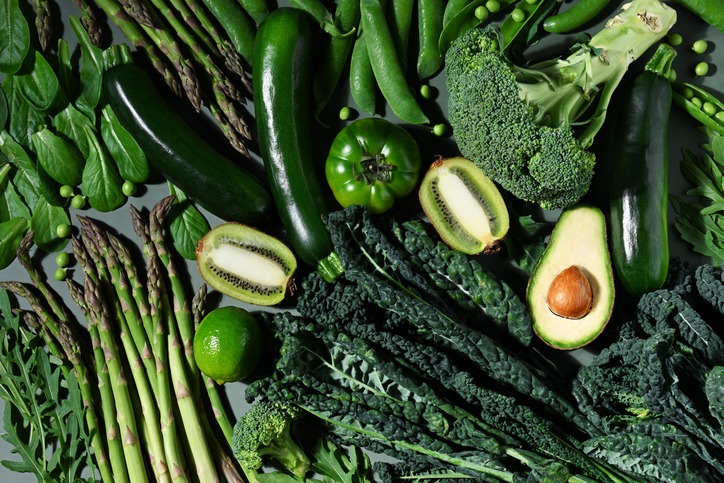
Green: The Nutrient-Dense Champions
Examples: Leafy vegetables, broccoli, kale, kiwi, avocado, green grapes, cucumbers, peas, and zucchini
Key nutrients: Beta-carotene, lutein, indoles, vitamin K, iron, and calcium
Green vegetables and fruits are true nutritional powerhouses, offering an impressive array of health-supporting compounds. Like their orange counterparts, green foods contain beta-carotene and lutein, both of which act as antioxidants while supporting vitamin A activity in your body. These compounds are particularly important for eye health and maintaining strong immune function.
Green produce also contains indoles, special compounds that may help block cancer-causing agents in the body, providing an additional layer of protection against cellular damage. The vitamin K found abundantly in green vegetables plays a critical role in blood clotting and bone development, ensuring your body can heal properly and maintain strong bones throughout life.
Additionally, the iron in green foods helps deliver oxygen throughout your body, keeping your energy levels up and supporting every cell’s function. Calcium promotes bone health and development while also enabling proper muscle movement and contraction.
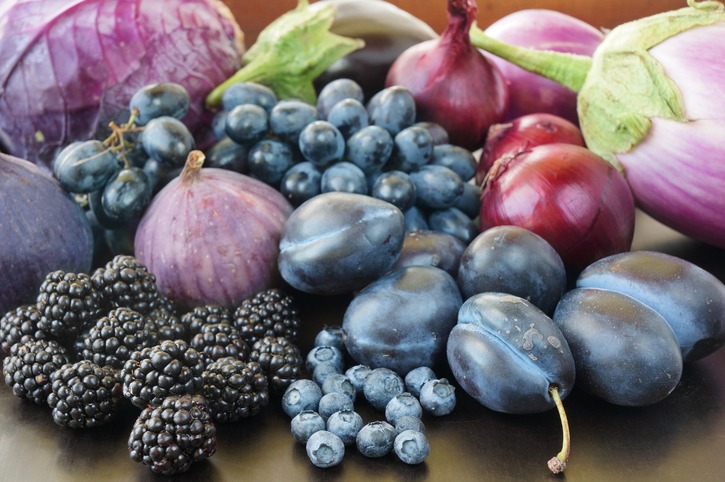
Blue and Purple: The Brain Boosters
Examples: Blueberries, blackberries, eggplant, plums, purple cabbage, and purple grapes
Key nutrients: Anthocyanins, ellagic acid, phenolics, manganese, vitamin E, and vitamin B-6
The deep, rich colors of blue and purple produce signal the presence of anthocyanins, powerful antioxidants that protect your cells from damage over time. These compounds are particularly beneficial for brain health and may help maintain cognitive function as you age.
Blue and purple foods also contain ellagic acid and phenolics, compounds that research suggests may help your body eliminate cancer-causing agents, providing protective benefits at the cellular level. The manganese found in these foods helps your body form connective tissue while also contributing to nutrient breakdown and absorption.
Vitamin E, abundant in purple produce, acts as another antioxidant layer, protecting cells from oxidative damage. Vitamin B-6 rounds out the nutritional profile by supporting immune function, helping your body defend against illness and maintain overall health.
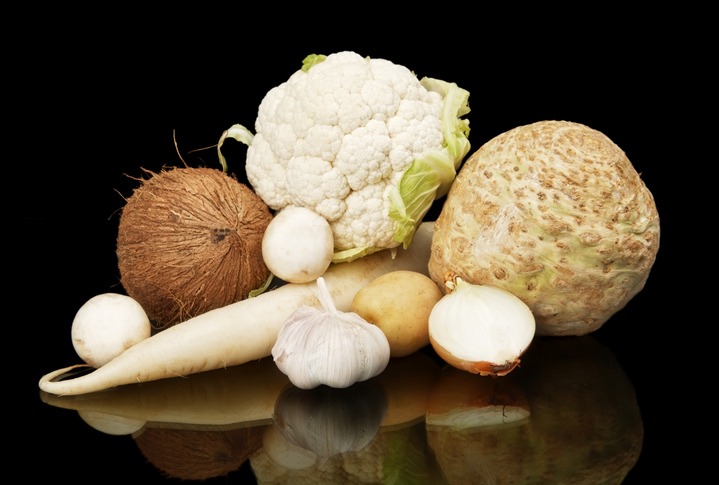
White and Brown: The Unsung Heroes
Examples: Bananas, cauliflower, ginger, turnips, onions, garlic, and mushrooms
Key nutrients: Allicin, allyl sulfides, vitamin C, potassium, and phosphorus
Don’t overlook white and brown produce. These foods pack powerful health benefits despite their more neutral colors. Foods like garlic and onions contain allicin and allyl sulfides, sulfur-containing compounds that have been associated with various health benefits, including potential antimicrobial and heart-protective properties.
Like many colorful fruits and vegetables, white and brown foods also contain vitamin C, which acts as an antioxidant to protect your cells from damage accumulating over time. Potassium, another key nutrient in this group, helps maintain fluid balance in your body, enables your brain to send signals throughout your nervous system, and helps keep your heart rhythm steady and regular.
While phosphorus is well-known for building strong bones and teeth, it’s quietly working behind the scenes in countless other ways. This mineral helps your body grow, maintain, and repair cells from head to toe. It’s also essential for producing energy. Without phosphorus, your body couldn’t make ATP, the fuel molecule that powers everything from your heartbeat to your thoughts.
Eating the Rainbow Tips and Takeaways
As you can see, each color group offers you and your family a different set of nutritional benefits, which is why nutrition experts emphasize the importance of variety. With spring approaching, there’s even more opportunity to enjoy seasonal fresh produce in all its colorful glory. Looking for creative ways to incorporate more servings into your family meals? Check out these helpful suggestions for sneaking in fruits and vegetables from the experts at Nemours KidsHealth®.