You’ve probably heard the news lately about measles outbreaks in the U.S. Although the disease was declared eliminated here in 2000, there have been increasing outbreaks across the country since 2024. In fact, 2025 saw more confirmed cases of measles in the U.S. than in any year since 1991.
Additionally, the Centers for Disease Control and Prevention (CDC) have already reported more than 982 confirmed cases in just the first two months of 2026, with the most occurring in South Carolina and Utah. With cases on the rise, parents must understand measles and know what they need to do to prevent and spot it in their children.
Vaccinations: The Best Protection Against Measles
Measles is a highly contagious virus and it’s not just a rash and a fever. It can cause serious health complications, especially in children younger than 5.
- About 1 in 4 people in the U.S. who get measles need to be hospitalized.
- 1 in 1,000 people with measles develop brain swelling, which can cause brain damage.
- 1 or 2 in 1,000 people with measles die, even with the best care.
- Measles killed 95,000 people globally in 2024, mostly children under 5.
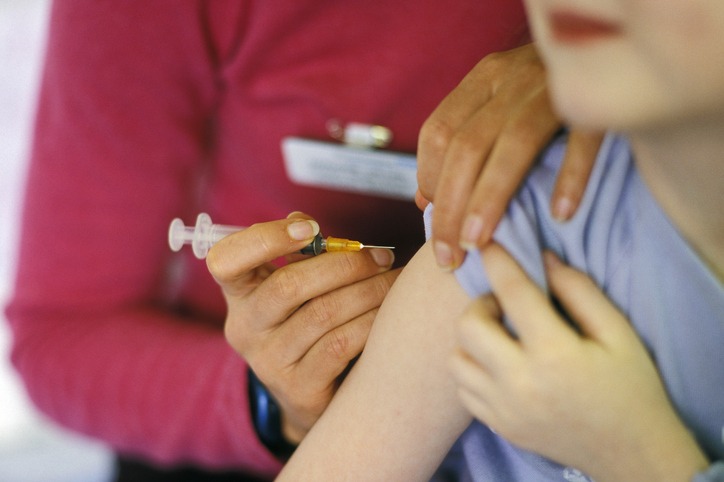
The large majority of people who get measles are unvaccinated (so far, 94% of the 2026 confirmed measles cases in the U.S. were unvaccinated or status unknown). Achieving measles elimination status in the United States was a historic public health achievement because measles was quite common before the vaccine. The measles-mumps-rubella (MMR) vaccine is extremely safe and effective and causes no side effects in most children. If there are any side effects, they are a mild fever, rash, soreness or swelling. Rarely, the vaccine might cause a high fever that could lead to a seizure.
The MMR vaccine does not cause autism.
Measles Vaccine Schedule
Children should receive two doses of the vaccine:
- 1st dose: 12–15 months old
- 2nd dose: 4–6 years old
One dose of the vaccine is about 93% effective; two doses increase that to 97% effective. If your children do not get the MMR vaccine, they are at a very high risk for contracting measles. In fact, CDC states that almost everyone who has not had the shot will get measles if they’re exposed to the virus.

If infants who are between 6 and 11 months old are about to travel from the United States to another country or live in or travel to an area with an active outbreak within the U.S., the CDC recommends they receive one dose of the vaccine beforehand. These children should still get the recommended routine doses at 12–15 months and 4–6 years of age. If kids are staying in an area where disease risk is high, they should get the first dose at 12 months and the second at least 4 weeks later.
The measles vaccine may help protect people who have no immunity to measles if they get it within 72 hours of measles exposure.
Measles Outbreaks in the U.S.
Measles is still common in many parts of the world and it’s currently spreading in some parts of the nation. Travelers with measles continue to bring or spread the disease in U.S. communities. Measles can spread when it reaches a community where groups of people are unvaccinated.
Before the 1963 vaccine, measles was devastating: nearly 500 deaths per year, 48,000 hospitalizations, and 1,000 cases of permanent brain damage. Since elimination in 2000, U.S. cases have been rare (37 to 1,274 annually), brought in by travelers from countries where measles still spreads.
That is, until the rapid escalation of measles in 2025 with 2,281 cases. This milestone (highest since 1991) included 45 jurisdictions and 49 outbreaks where 11% of people were hospitalized, and three people died, including two children. In 2024 and 2025, more than 90% of cases occurred in people who were unvaccinated or had unknown vaccination status.
At least 95% of people need to be vaccinated to prevent measles outbreaks. The CDC reports that the U.S. national MMR coverage among kindergarteners has decreased and is now below the 95% coverage target — with much lower coverage in some communities. Measles also spreads during times of high travel (like spring break or holidays) or where unvaccinated kids are in close quarters (like summer camp). This explains why outbreaks are spreading more in the past couple years.
Childhood Measles Symptoms
Measles is an incredibly contagious virus, and it spreads through the air when an infected person coughs, sneezes, or even talks to you. The virus can also live on surfaces for several hours. If one person has it, 9 out of 10 people around him or her will also become infected if they are not immune.
A person can develop immunity by getting vaccinated, or by having a history of the disease in the past. An infected person can spread measles to others from four days before developing the rash through four days afterward.
An unvaccinated child can get measles just by being in a room where a person with measles has been — even up to two hours after they’ve left. If your child has not been vaccinated and has been exposed to the virus, they will likely show no symptoms for up to two weeks after being infected (the incubation period). The following symptoms (similar to a cold or virus) usually develop after two weeks:
- Moderate fever
- Cough
- Sore throat
- Runny nose
- Fatigue
- Red and swollen eyes
- Small red spots with white centers inside the mouth (called Koplik’s spots)
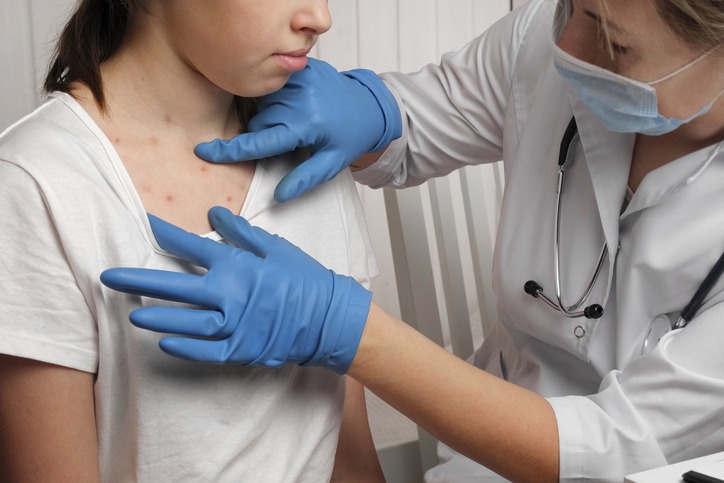
After two or three days of these symptoms, fever spikes as high as 104 or 105 degrees occur along with red dots that appear on the skin. The rash develops first on the face, then spreads down the body.
Children with measles should be closely watched by a doctor. Some people are at high risk for problems if they contract measles, particularly infants, children under 5, pregnant women, and people with immune system problems. In some cases, measles can lead to other problems, such as:
- Ear infections
- Croup
- Diarrhea
- Pneumonia
- Encephalitis (irritation and swelling of the brain)
If your child develops the virus:
- Call your doctor (before bringing the child to medical attention)
- Give them plenty of fluids
- Encourage extra rest
- For fever, give a non-aspirin medicine, such as acetaminophen or ibuprofen
Measles infections can last from several days to a couple of weeks. Kids with measles should be kept away from others for four days after their rash appears. Because measles is a virus, there is no specific medical treatment for it; the virus must run its course. Call your doctor right away if you think that your child has measles and also if he or she has been around someone who has it.
Learn More About Measles and Your Child’s Vaccines
Track measles cases and outbreaks in the United States with the CDC’s measles case tracker. Learn more about your child’s vaccines, including why vaccinations are important for your children, your family, and your community, from the experts at Nemours KidsHealth®.