3-5 years: Preschool | Nemours Blog | Pediatric News and Guidance From Our Experts

ARTICLES RELATED TO:
3-5 years: Preschool

Young child wearing a backpack enters an early childhood classroom while holding an adult's hand as other children participate in learning activities.

Nemours Children’s Health is Leading a New Movement for Kindergarten Readiness

Right now, there are new kindergarteners running off the school bus, bursting with pride to tell their families how caterpillars become butterflies. In class, their little hands shoot up in the air when the teacher asks what sound the letters “CH” make. “You’ve grown so much since you were a baby!” their pediatricians exclaim, smiling. For other kids, the shift into a structured classroom isn’t so smooth. When lessons are hard to follow, they tune out. Following directions or cooperating with the other kids can be overwhelming, leading to emotional outbursts. Lunch can’t come soon enough—there wasn’t much to eat at home. Instead of rapidly learning new information, these kids are struggling to catch up. Today, more than a third of U.S. children entering kindergarten are not academically, physically, socially, and emotionally ready to learn. That is not just an education problem—it is a health problem as well. Educational achievement […]


Adult reading a picture book with a young child on a couch, illustrating early literacy development through shared interaction

AI and Your Child’s Literacy: What Every Parent Needs to Know

Before your child can read a single word, they’re learning to read the world. Your gaze, your voice, the way you answer their coos and cries — all of these inputs wire their brain for a lifetime of learning. It’s an invisible curriculum, delivered in the ordinary moments of daily life, and it’s the foundation upon which all language and literacy are built. It’s also, quietly and without much public debate, under threat. Learning Starts Long Before Reading As a pediatric surgeon and social scientist, my entire career has revolved around one central question: What do children need from the adults in their lives in order to thrive? Again and again, the science points to the same thing: Nurturing human interaction, and a whole lot of it. Not “educational” videos. Not apps. Not YouTube. Your words, your songs, your eye contact. This is why I’ve spent the last 15 years […]

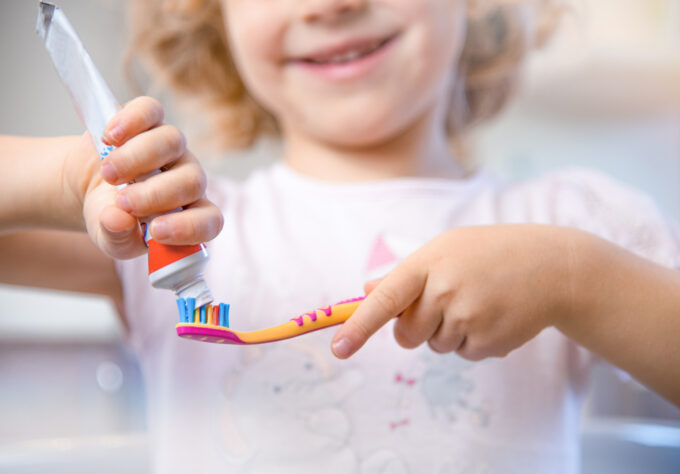
Closeup of little girl putting fluoride toothpaste on a toothbrush.

Fluoride for Kids: Benefits, Safety, and Guidelines for Parents

Every parent wants their child to grow up with a healthy smile, and fluoride plays a crucial role in making that happen. This natural mineral has transformed children’s dental health over the past eight decades, dramatically reducing cavities and preventing painful tooth decay. While fluoride works throughout life, it’s particularly valuable during childhood when teeth are developing and most vulnerable to decay. Understanding how fluoride works, where it comes from, and how to use it safely empowers parents to make informed decisions about their children’s oral health. Here’s what you need to know. What is fluoride? Fluoride is a natural mineral found in water and soil. Trace amounts of fluoride are found naturally in some foods. Fluoride is also found in toothpastes, mouth rinses, and supplements prescribed by dentists or doctors. Fluoride mainly supports dental health. The good news is that children absorb fluoride efficiently, as their teeth and bones […]

girl making a face while eating a vegetable

Tips for Helping Your Picky Eater Enjoy Healthy Foods

You are at your pediatrician’s office for a well-visit, and the doctor asks you to describe your toddler’s diet. You want to say they eat a variety of healthy foods, but in reality, your child refuses to look at anything green or remotely healthy and is hooked on pizza, chicken nuggets, and mac and cheese. Does this sound familiar? Don’t worry — you’re not alone, and we’re here to help! Let’s work together to find creative ways to get more fruits and vegetables into your picky eater. Better Tricks for Better Eating Habits You may have heard about ways to sneak healthy options into foods your child already likes, such as zucchini in muffins and blended broccoli into spaghetti sauce. While this is a great way to increase fruit and vegetable intake, there may be more long-term benefits in helping your child learn to want to eat these foods. To […]

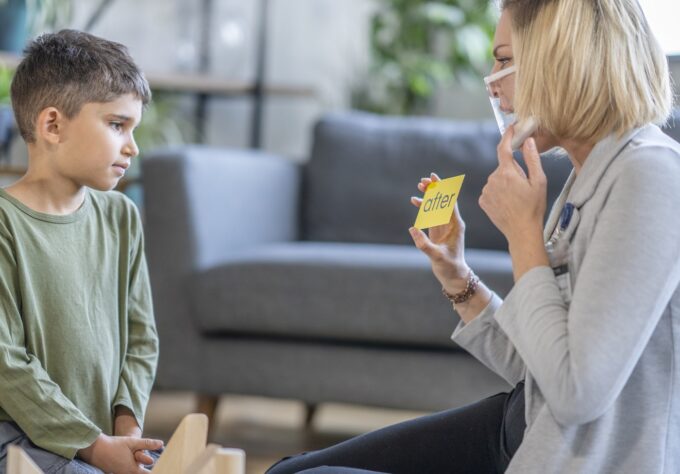
Stuttering: What to Know About a Common Speech Problem in Kids

Stuttering: What to Know About a Common Speech Problem in Kids

As toddlers and preschoolers begin to speak more, they might stumble over their words or have problems with enunciating certain sounds. That being said, how do you know if your child is having typical speech problems, or experiencing something more than just the common stumble over their words? What is stuttering? Many young kids go through a stage between the ages of 2 and 5 when they stutter. This might make them: repeat certain syllables, words, or phrases prolong them stop, making no sound for certain sounds and syllables Stuttering is a form of dysfluency (dis-FLOO-en-see), an interruption in the flow of speech. What Causes Stuttering? Doctors and scientists aren’t completely sure why some kids stutter, but most believe that a few things contribute to it, such as: a problem with the way the brain sends messages to interact with the muscles and body parts needed for speaking. Genetics, kids who stutter […]

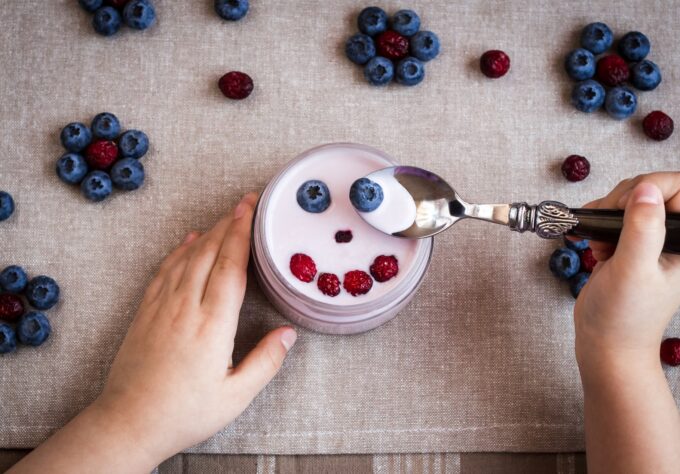
Choosing the Best Yogurt for Kids

Choosing the Best Yogurt for Kids

A walk down the yogurt aisle can be overwhelming to say the least.  There is Greek, French-style, Icelandic, drinkable, squeezable, organic, fruit on the bottom, whipped, non-GMO, and dairy free. Supermarkets may have up to 500 different varieties of yogurt on the shelves. So which is the best yogurt for kids?  What is yogurt? According to the FDA, yogurt is defined as a fermented dairy product.  It is derived from the fermentation of milk by two species of bacterial cultures, Streptococcus thermophilus and Lactobacillus bulgaricus.  Other cultures such as Lactococcus lactis, Lactobacillus casei, or different species of bifidobacteria may be added for taste, texture, or for their probiotic properties.  There is no FDA standard for plant-based yogurts, which may be fermented using S thermophilus and L bulgaricus.1  Live cultures are living organisms which change milk into yogurt during fermentation. Some yogurts are heat-treated after fermentation and most, if not all, of the […]

Behind Their Bite: When is “Picky Eating” Something More?, Powered by Nemours Children's Health System

Behind Their Bite: When is Picky Eating Something More?

Everyone knows one, has one or was one – a picky eater. The logic behind why a child does or does not eat something is difficult to understand. Sometimes picky eating is as simple as a food being too bitter or too bland. Other times, it can be more complex. I like to remind parents that it can take anywhere from 10-15 tries before a taste becomes likable or even familiar. Coffee is a great example. The first time you tried it, I bet it wasn’t your favorite food. But over time — and early wake ups, dance recitals, baseball practice, carpool, swim lessons and potty training — it probably holds a pretty significant place in your heart (and your sanity). Introducing new foods to picky eaters Introduce a new food with old foods and favorite foods (example: mac and cheese with broccoli) Consider “taste-ability.” Crunchy, sweet, good-looking foods will […]

Closing The Gap In Reading Readiness For America’s Preschoolers | Dr. Laura Bailet | Promise, powered by Nemours

Closing the Gap in Reading Readiness for America’s Preschoolers

While many parents are familiar with developmental screenings for hearing or vision, they may not be aware of the importance of screening for issues like reading readiness. Reading readiness screening tools—like the Nemours BrightStart! Preschool Reading Screener for children ages 3-5—can provide a snapshot of a child’s progress in essential pre-reading skills. They can also show how a child’s progress compares to developmental milestones for those skills. Early screening gives parents, health and early childhood professionals the chance to offer additional supports for children who may not be on track for developmental milestones. Providing these supports as early as possible makes it much more likely that children will gain the skills they need to be successful readers. Nemours knows that literacy and health are connected, so we developed ReadingBrightStart.org to help parents build their children’s early literacy skills. It’s loaded with tips, milestones, developmentally appropriate activities, articles and recommended books by age, […]

5 Simple Ways to Grow Good Behavior With Time-Ins, by Meghan Tuohy Walls, PsyD, Powered by Nemours Children's Health System

5 Simple Ways to Grow Good Behavior With Time-Ins

We all know about time-outs: Sending children to their room or removing them from enjoyable people or activities. But how well do we practice time-ins, which help reinforce good behaviors? And why should we work on quality time together? Why Time-Ins and Quality Time? Quality time with parents provides many benefits to kids. An important thing to remember is that quality really does matter over quantity. It’s not necessarily how many minutes you spend with your children, but that you’re present and make the time matter when you’re together. Research suggests positive quality time with parents results in a number of positive outcomes, including: strengthening the parent-child relationship fostering communication improving behavior decreasing later risks in adolescents for both mental health and health outcomes You’re also modeling positive relationships for your children and helping them understand the importance of being engaged and consistent. Start Simple 1. Snuggle. Be generous with your […]

Afraid preschooler curled up in chair shows impact of anxiety in young kids

Anxiety in Young Kids: 4 Ways to Help

Many parents wonder: “Is my child’s anxiety normal? Should I be worried?” While anxiety in young kids can be nerve-wracking for parents, it has a lot to do with age and development. Anxiety about a certain trigger can be completely appropriate at one stage and inappropriate at another. For example, it’s entirely normal for children up to age 2 to have some degree of separation anxiety, but we hope that kids are able to separate without too many tears around ages 3 or 4. Being worried about dogs, bees, storms and sudden loud noises is totally understandable for 3- and 4-year-olds because they’re starting to understand that the world can be scary sometimes. It’s also expected that kids of this age will go through a phase when they’re exercising mastery of their environment – when it’s “my way or the highway,” which can often be mistaken for obsessive-compulsive disorder (OCD). For […]

Mother spanking daughter instead of using other tactics

Spanking: 10 Tactics to Try Instead

If ever there were a hot-button parenting topic, it’s spanking. The argument for spanking from some parents and often-well-meaning relatives sometimes goes: “I was spanked and my parents were spanked, and we all turned out just fine. Kids today wouldn’t be such spoiled, disrespectful brats if their parents had a firm hand.” To which opponents of spanking (from pediatricians to mental health professionals, from your neighbor to a mom’s group friend) might say… “But research consistently shows that spanking: teaches children that it’s OK to hit when they’re angry can cause anger, aggression, resentment and physical harm (Babies and toddlers are especially unlikely to be able to make any connection between their behavior and physical punishment. They will only feel the pain of the hit.) often doesn’t teach the lesson a parent is trying to convey can make children fearful and resentful of (instead of respectful toward) their parents may […]

What's Up With Kids' Blood Pressure?

What’s Up With Kids’ Blood Pressure?

We don’t usually think of blood pressure as a matter of concern during childhood — and for most kids, it’s not. But blood pressure is an important vital sign and one that your child’s physician should be taking at every check-up. Babies’ blood pressure measurements are taken at birth as part of routine newborn screenings. After that, expert guidelines, including those of the American Academy of Pediatrics (AAP), call for measurements to be taken at well-child visits and sick visits in the pediatrician’s office, starting at age 3. What’s Considered “Normal” Blood Pressure for Kids? Determining normal or optimal blood pressure for children is a bit complex because it depends on a number of factors including age, height and gender. A simplified approach is to use these thresholds: A child from 3 to 11 years should have blood pressure at or below 110/70. From age 12 upward, a measurement of […]

Page 1 of 1

Page 1 of 1

Page 1 of 1